
The Cost of Waiting Another Season
Every year, homeowners in this part of Florida tell themselves they'll deal with the garage door after hurricane season. Then a storm forms faster than expected, the wind picks up on a Tuesday afternoon, and there's no time left to do anything but hope. A door that fails in high wind doesn't just mean a dented panel. Once wind gets inside a garage, it pushes up on the roof from underneath, and that's how homes lose roofs, not just doors. Skipping an inspection for one more season isn't free. It's a bet that this will be the year nothing strong comes through, and in a region that sits squarely in the path of Gulf and Atlantic storm systems, that's not a bet worth making twice.
Why the Garage Door Is the Weakest Wall in the House
Most exterior walls are solid, braced, and tied into the home's structure. A garage door is a large panel of moving parts held in place by springs, tracks, rollers, and a handful of hinges. It's also usually the biggest opening in the entire house. When straight-line winds or hurricane gusts hit a home, that door takes more direct pressure per square foot than almost any other surface.
If the door buckles, bows, or blows off its track, wind rushes into the garage and pressurizes the whole structure from the inside. That internal pressure is what tears off roof decking and blows out windows in homes that otherwise would have ridden out the storm fine. A garage door isn't just a convenience feature. Structurally, it's a load-bearing weak point, and it's treated that way under wind-load design standards for a reason.
Signs Your Door Isn't Ready for Wind Load
- Visible bowing in the panels when the door is closed, even slightly
- Rust at the track brackets or hinges, which is common here given the humidity and salt air closer to the coast
- Loose or missing track bolts that let the door shift under pressure
- Worn or cracked rollers that can pop out of the track when the door flexes
- A door that's noticeably heavier or sticks due to swelling from moisture, which strains the opener and the springs
What Actually Holds Up in Wind
Wind-rated garage doors are built with reinforced panels and stronger track systems designed to resist specific pressure loads. If your door was installed years ago, before current wind-load expectations were standard in this area, it may not meet the same bar as a door installed today. That doesn't always mean a full replacement is needed, but it does mean the bracing, track gauge, and hardware should be checked against what the door can actually handle.
For doors that are structurally sound but aging, a horizontal or vertical bracing kit can add real wind resistance without replacing the whole unit. These braces reinforce the panels so the door resists flexing and buckling under gusts. They're a reasonable middle option between doing nothing and a full replacement, especially on doors with another few years of useful life left.
Steps to Take Before the Next Storm Rolls In
- Check the track alignment. Afternoon downpours and humidity swings can warp wood framing around the track over time, pulling it slightly out of true. A misaligned track is far more likely to let go under pressure.
- Inspect rollers and hinges for rust. Moisture exposure corrodes hardware faster here than in drier climates. Rusted rollers bind, crack, or seize at the worst possible moment.
- Test the springs. A door with a weak or unbalanced spring puts more strain on the opener and the track system, both of which need to be functioning at full strength when wind hits.
- Tighten all track and bracket bolts. Vibration from regular use and from previous storms loosens hardware gradually. This is a five-minute check that prevents a serious failure.
- Confirm the weatherstripping is intact. Worn seals let wind-driven rain into the garage, which adds to swelling and rust problems on top of the water damage itself.
- Make sure the opener has reliable power. If outages are common during storms in your area, a battery backup keeps the door operable, including letting you close it manually if needed, during an active power loss.
What Happens If the Door Fails Mid-Storm
Once a garage door fails under wind pressure, the damage rarely stops at the door itself. Water intrusion into the garage can ruin stored belongings, damage the slab, and seep into attached walls. More seriously, the pressure imbalance inside the home can stress the roof structure and interior walls in ways that aren't always obvious until weeks later, when leaks or cracks show up. A door that's properly braced, aligned, and maintained is one less failure point during a storm that already has enough unpredictable variables.
When to Call Brooker Garage Door
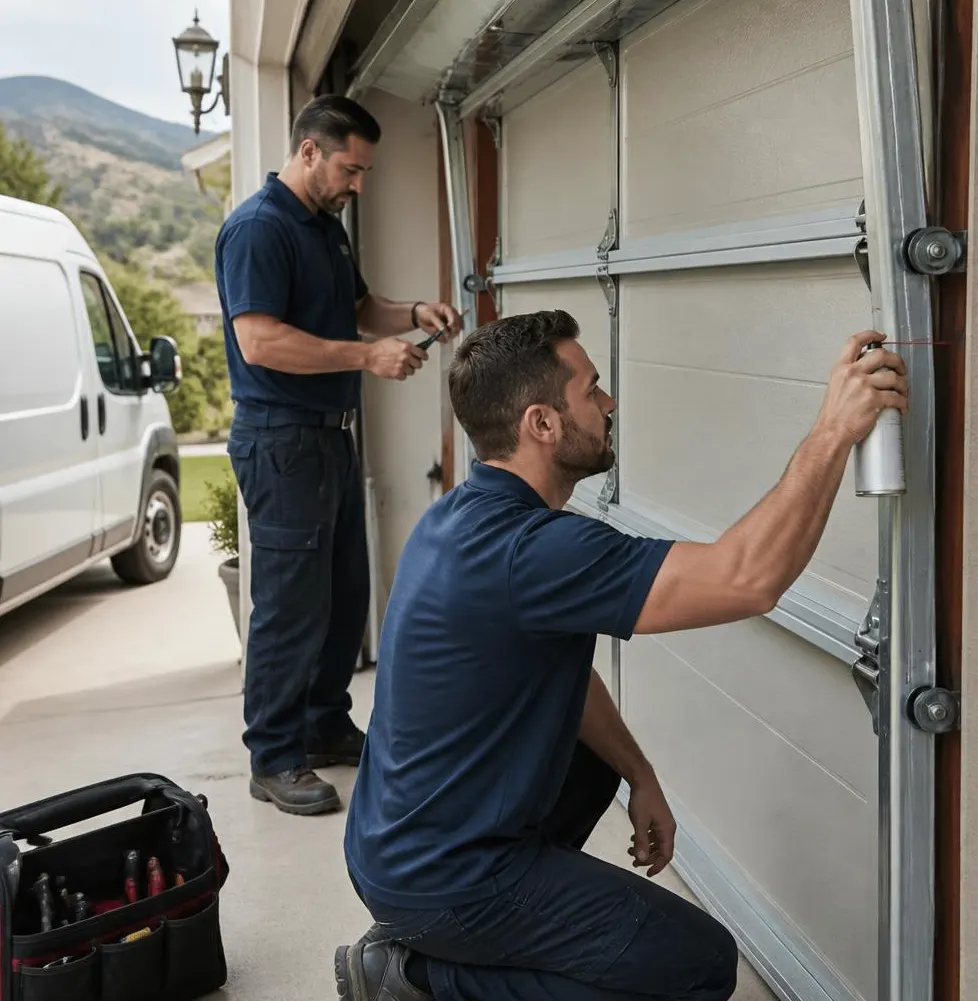
If you've noticed rust on the hardware, a door that seems to flex in strong wind, or you simply don't know how your current setup holds up under pressure, it's worth having it looked at before storm activity picks up. Brooker Garage Door handles Garage Door Tune-Up & Maintenance to catch rust, worn rollers, and loose hardware before they become failure points, and Off Track Door Repair for doors that have already started shifting out of alignment. Both are far cheaper and faster to address now than after a storm has already tested the door's limits.
If you're in Brooker, Starke, Alachua, Worthington Springs, LaCrosse, Hampton, Waldo, or High Springs and want your garage door checked before the next storm system develops, call Brooker Garage Door today to schedule an inspection.