
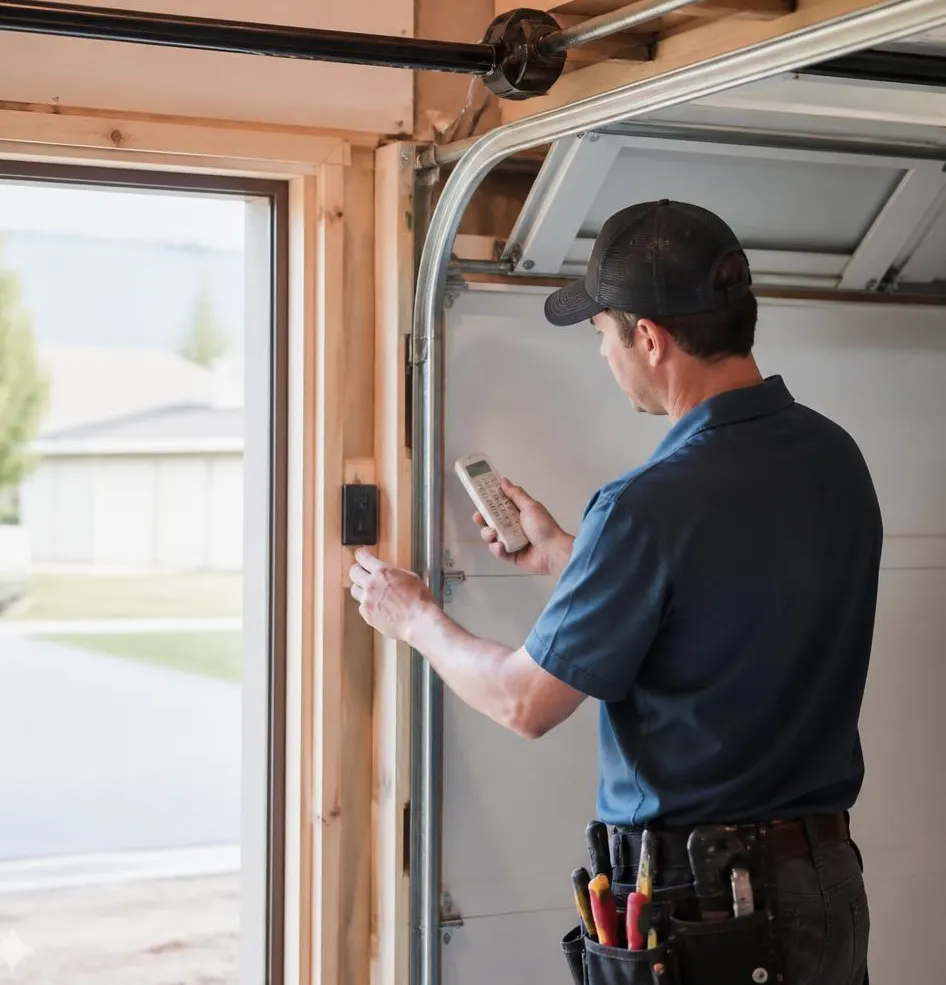
The Mistake Most Homeowners Make First
The first thing most people do is nothing — they wait for the loud bang. It's tempting, because garage door springs are quiet, tucked out of sight above the door, and the opener keeps doing its job right up until the moment it doesn't. A door that opens and closes normally feels like proof that everything under the hood is fine. But springs don't usually fail out of nowhere; they wear down gradually, and the warning signs show up weeks or months before the snap. The trouble is nobody looks until the door won't budge.
Here in north central Florida, that wear happens a little faster than the manual suggests. Humidity swells wood and metal components, afternoon downpours work moisture into unsealed hardware, and hurricane-season prep means extra open-and-close cycles as people load vehicles or secure the garage before a storm. All of that adds stress to springs that are already doing a few thousand lifts a year. A five-minute walkthrough a couple times a season catches most of it.
Before You Start: Know Which Springs You Have
Torsion springs sit on a metal shaft directly above the closed door, usually one or two thick coiled springs mounted to a center bracket. Extension springs run along the horizontal tracks on either side of the door, stretching and contracting as the door moves. The checklist below covers both, but never attempt to adjust, unwind, or remove either type yourself — they're under heavy tension and that's genuinely dangerous. This is a looking checklist, not a repair checklist.
The Checklist
- Gaps in the coil (torsion springs). Run your eyes along the spring's length. A visible gap or separation between coils, especially near the end, usually means the spring has already stretched past its working tension. If you see one, treat the spring as near failure, not just worn.
- Rust color and flaking. Light surface rust is cosmetic. Rust that's flaking off, pitted, or has changed the spring's color to a dull orange-brown means moisture has been eating into the metal itself. In humid, coastal-adjacent air this happens faster than people expect, and rusted springs lose tensile strength even if they still look intact.
- Mismatched springs on a two-spring torsion system. If one spring looks longer, looser, or visibly different in coil spacing than its twin, the two are no longer sharing the load evenly. That mismatch accelerates failure of the weaker one and puts uneven strain on the shaft and cables.
- Frayed strands near the spring (extension systems). Extension springs attach to cables that run through pulleys. Fraying, kinks, or rust at the point where cable meets spring is a sign the whole assembly is under more strain than it should be.
- Missing or disconnected safety cables. Extension spring systems should have a safety cable running through the center of the spring. If yours is missing, snapped, or not secured at both ends, that's not a wear sign — it's a safety gap that needs fixing regardless of the spring's condition.
- The manual balance test. Disconnect the opener (pull the release cord) and lift the door by hand halfway. A balanced door with healthy springs stays roughly in place. If it drops on its own or feels unusually heavy, the springs have lost tension and are compensating poorly.
- Opener strain and odd noises. Listen for grinding, popping, or a labored hum as the door lifts. An opener working harder than it used to is often covering for a spring that's no longer pulling its share of the weight.
- Uneven or jerky movement. Watch the door's travel from open to closed. Jerking, pausing, or one side lagging behind the other points to uneven spring tension, which also wears tracks and rollers faster.
- Faster-than-normal closing speed. If the door seems to drop the last foot or two instead of settling, the springs may no longer be controlling its weight the way they should.
When to Call Brooker Garage Door
If you spot a gap in a torsion coil, mismatched springs, flaking rust, or a door that fails the balance test, it's time to call rather than wait. Our Garage Door Spring Repair service replaces worn torsion or extension springs with correctly rated hardware sized to your door's weight and cycle count — not a generic swap. If everything looks borderline but nothing's clearly failing yet, our Garage Door Tune-Up & Maintenance visit checks spring tension, lubricates moving parts, and inspects cables and pulleys before storm season cycles put more strain on them.
Homeowners across Brooker, Starke, Alachua, Worthington Springs, LaCrosse, Hampton, Waldo, and High Springs call us when something on this list doesn't look right. Catching a worn spring during an inspection is a lot cheaper and safer than dealing with a snapped one on a Saturday morning. If any of these signs match what you're seeing in your garage, give Brooker Garage Door a call and we'll take a look before it becomes an emergency.