
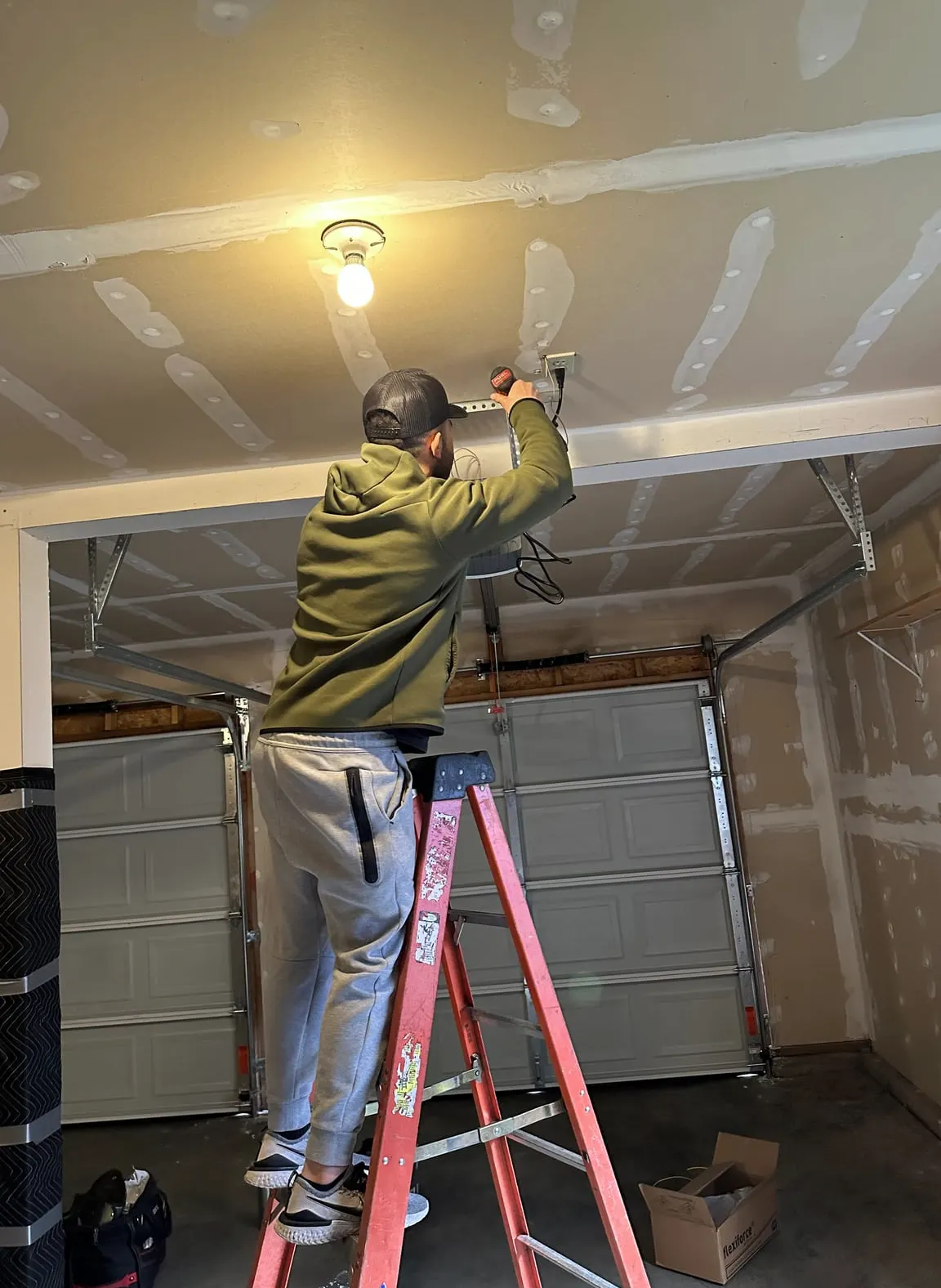
If your garage door reverses before it touches the ground, or won't close at all, the photo-eye sensors are almost always to blame. The exceptions are worth knowing too: a worn limit switch, a failing circuit board, or a spring that's lost tension can mimic the same symptoms, so if cleaning and aligning the sensors doesn't fix it, the problem is likely mechanical or electrical further up the system.
What the Photo-Eyes Actually Do
Every garage door opener built since 1993 has two small sensors mounted about six inches off the ground on each side of the track. They send an invisible beam across the doorway. When something breaks that beam while the door is closing, the opener reverses the door instead of letting it close on a pet, a bike, or a person. One sensor has a small LED light; the other usually doesn't. When they're aligned and working, that LED glows steady. When it flickers or stays dark, the door won't close, or it will close and then immediately reverse.
Why They Trip More Often in This Part of Florida
Photo-eyes are simple, but they're also exposed, and Brooker's climate gives them plenty to react to:
- Humidity and condensation: Moist air settling on the lens overnight can fog it just enough to scatter the beam.
- Afternoon downpours: Wind-driven rain can splash dirt and water onto the sensor housings, especially if the door faces the street.
- Spiders and insects: Webs spun directly across the lens are one of the most common causes of false triggers, and garages here attract them year-round.
- Direct sun glare: Low afternoon sun angling straight into one sensor can wash out the beam temporarily.
- Bumped brackets: A bike, mower, or vehicle nudging the track knocks the sensor out of alignment by even a few degrees, which is enough to break the beam.
- Corroded wiring: Humidity and salt air closer to the coast can corrode the low-voltage wire connections over time, causing intermittent signal loss that looks like a dirty lens but isn't.
How to Clean and Align Them
This is a five-minute job most homeowners can do without tools:
- Unplug the opener or switch off power at the breaker before touching anything.
- Wipe each lens with a soft, dry cloth or a cotton swab. Avoid glass cleaners with ammonia, which can leave a film.
- Check both brackets for visible bumps, bends, or loose mounting screws. If one sensor sits even slightly higher or angled differently than the other, that's your problem.
- Loosen the wing nut or screw holding the bracket, gently realign it so both sensors face each other directly, then restore power.
- Watch the indicator LED. A steady light means alignment is correct; blinking or no light means it's still off, or the wiring has an issue.
- Test the door by waving a broom handle through the beam while it closes. It should stop and reverse immediately.
If the lenses are clean, the brackets are solid, and the light still won't hold steady, suspect a wiring break, a corroded connection, or a failing circuit board inside the opener itself, especially in garages where humidity has been a long-term issue.
Why Not to Bypass Them
It's tempting to tape over or disconnect a sensor that's giving you trouble just to get the door working again, especially during storm season when you need the garage sealed up fast. Don't. The auto-reverse feature exists because garage doors are heavy enough to cause serious injury or worse, and small children and pets are exactly the kind of obstruction these sensors are built to catch. Some older openers can be forced into a bypass mode through the wall control, but doing so turns a thousand-pound door into a hazard with no safety net. If the sensors are failing, fix the cause, don't remove the safeguard.
When to Call Brooker Garage Door
If you've cleaned and aligned the sensors and the light still won't hold, or you notice corrosion on the wiring where it meets the sensor housing, that's a sign the issue has moved past a simple fix. Brooker Garage Door can diagnose whether it's a wiring fault, a failing logic board, or a sensor that needs replacing, and our Garage Door Tune-Up & Maintenance service checks photo-eye alignment, track condition, and opener wiring together so small issues don't turn into a door that won't close before the next storm rolls in. If your opener is older and the sensors are original, we can also talk through a Garage Door Opener Installation that includes updated, more weather-resistant sensors.
If your garage door in Brooker, Starke, Alachua, or anywhere nearby is reversing unexpectedly or won't close, call Brooker Garage Door for a fast, honest diagnosis before the next round of storms tests it for you.