
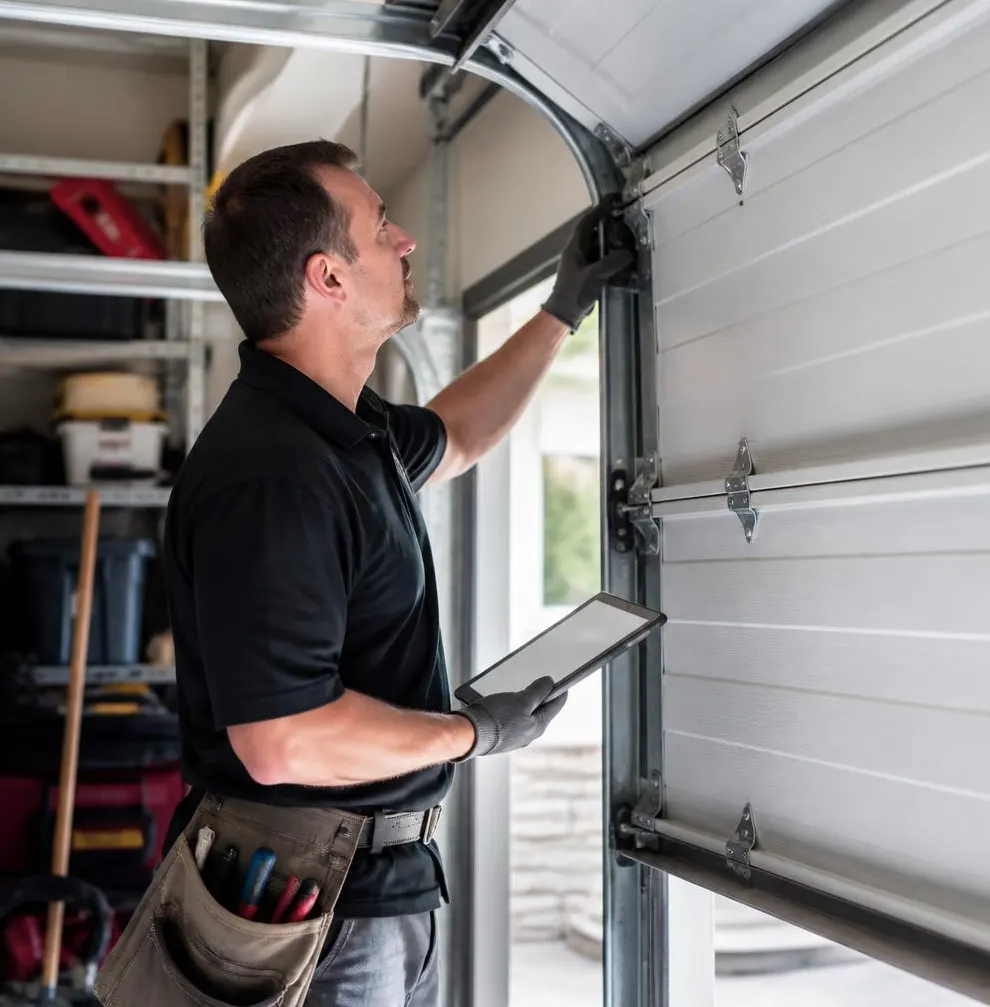
What a Technician Usually Finds on These Calls
By the time a service truck pulls into a driveway in late October or November around Brooker, the complaint is usually the same: the door worked fine all summer, and now it's suddenly slow, noisy, or hanging crooked. Nine times out of ten, it's not one big failure. It's months of heat, humidity, and afternoon downpours finally catching up with hardware that's about to deal with cooler, drier air and the occasional sharp temperature swing.
This part of Florida doesn't get snow or ice, but the shift out of hurricane season still stresses a garage door system in its own way. Wood-composite panels that swelled slightly from humidity start to dry and shrink. Springs that stretched under heat and moisture behave differently once nights get cooler. Metal tracks and hardware that picked up surface rust during storm season need attention before that rust spreads. None of this is dramatic on its own, but ignored together, it adds up to a door that strains the opener, slips off track, or stops working right when you need it most.
Why This Transition Matters for Local Doors
Homes in Brooker, Starke, Alachua, and the surrounding area spend months under heavy humidity, salt-tinged air if you're closer to the coast, and the kind of hard afternoon rain that finds its way into every gap and seam. That moisture does three things to a garage door system over a season: it corrodes exposed metal fasteners and springs, it swells wood or composite panels and weatherstripping, and it loosens hardware as materials expand and contract repeatedly. As temperatures start to drop and the air dries out heading into winter, those same materials contract again, which is often when a marginal part finally fails outright. A spring that was quietly losing coil tension all summer might snap on the first cool morning. A panel that swelled slightly may now show a visible gap as it shrinks back.
Spring Tension and Balance
Garage door springs do the heavy lifting, literally, and they're sensitive to temperature changes. Metal contracts slightly in cooler weather, which can make a spring that was already weakened by humidity and heat feel noticeably different, usually stiffer to lift by hand or louder in operation. Test the balance: disconnect the opener, lift the door manually, and see if it stays roughly in place when let go around waist height. If it drops or shoots up, the spring tension is off. This is also the time to listen for grinding or popping sounds during operation, which often means a spring is close to the end of its life. Don't attempt to adjust or replace torsion springs yourself; they're under heavy load and can cause serious injury if handled wrong.
Tracks, Rollers, and Off-Track Risk
Storm season leaves behind more debris and grit than people expect, and a lot of it settles into the track channels. Combined with rust that started forming during wet months, this buildup makes it easier for a door to jump the track, especially if the door's already slightly misaligned. Wipe down the tracks, check for visible rust or pitting, and look for gaps between the rollers and the track on either side. A door that looks like it's sitting unevenly, or one that scrapes and shudders partway through its cycle, is a strong sign the tracks need realignment before they cause real damage.
Weatherstripping and Panel Gaps
The rubber seal along the bottom of the door and the weatherstripping around the frame take a beating from UV exposure and constant wet-dry cycling all summer. By fall, a lot of it is cracked, flattened, or pulling away from the frame. This matters more than it seems: gaps let in wind-driven rain during the last storms of the season and let in drafts once nights turn cooler. Replacing worn weatherstripping is inexpensive and straightforward, and it's worth doing before the next heavy rain rather than after you've already got water pooling just inside the door.
Opener and Sensor Check
High humidity is hard on electronics. Check that the safety sensors near the bottom of the tracks are clean, properly aligned, and not fogged or corroded. Test the auto-reverse function by placing a scrap piece of wood in the door's path and making sure it reverses on contact. If the opener has been running louder than usual, hesitating before engaging, or needs multiple remote presses to respond, those are early warning signs rather than things to wait out through winter.
When to Call Brooker Garage Door
A homeowner can handle the visual inspection and basic cleaning, but anything involving spring tension, cable condition, or a door that's visibly off track is worth a professional look before it becomes an emergency. If your door is sagging on one side, making grinding noises, or the opener is straining to lift it, that's a sign to schedule a Garage Door Tune-Up & Maintenance visit now, before the first real cold front puts extra strain on worn parts. If a cable has frayed or a panel took damage during the last round of storms, our Garage Door Cable Repair and Garage Door Panel Replacement services address those issues directly rather than leaving a quick patch that fails again in a few weeks.
If you're noticing any of these signs on a home in Brooker, Starke, Alachua, Worthington Springs, LaCrosse, Hampton, Waldo, or High Springs, call Brooker Garage Door for a seasonal inspection. We'll check springs, tracks, seals, and opener function, and take care of what needs fixing before winter settles in.